How to Create Accurate Summaries of Long Articles, Documents, and Meeting Transcripts
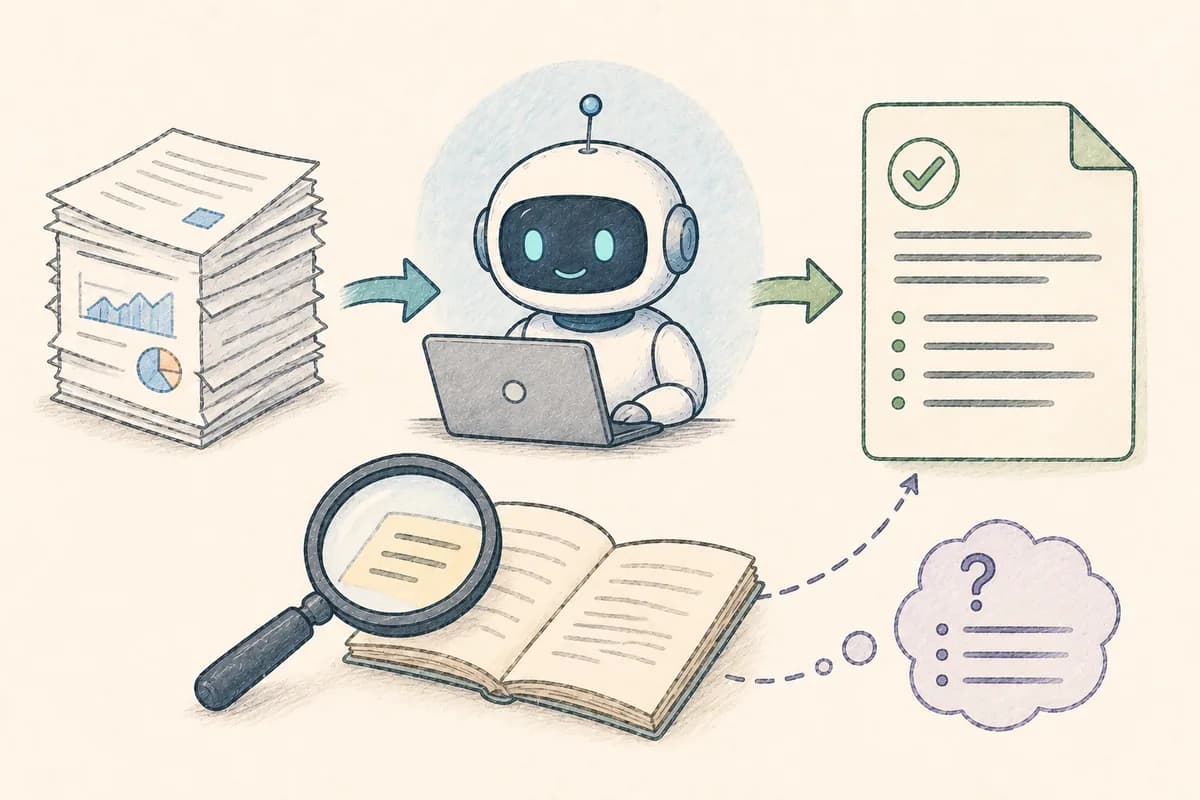
A summary is the one AI output almost nobody checks. Think about why. To verify a summary of a 40-page contract, you would have to read the 40-page contract, which is the exact chore you used AI to skip. So the summary gets a glance, a nod, and a spot in your decision-making, all without anyone confirming it matches the source. That blind spot is where the real danger lives.
Why Summaries Are the Riskiest Thing AI Does
Summarizing is, by a wide margin, the most common thing people actually use AI for in day-to-day work. Long email threads, dense reports, recorded meetings, research papers, legal documents. Feed it in, get the short version out. It is genuinely one of AI's best skills.
It is also where hallucinations hide best. In a short factual answer, a made-up detail sticks out. In a summary of something long, a fabricated or distorted point blends right in, surrounded by accurate points, and there is no easy way to catch it short of checking the original. The longer the source, the less likely anyone fact-checks the summary, and the more comfortably an error rides along. A summary that is 95 percent faithful and 5 percent invented looks exactly like a summary that is 100 percent faithful. You cannot tell them apart by reading the summary alone.
The Core Idea: Give the Model a Second Job
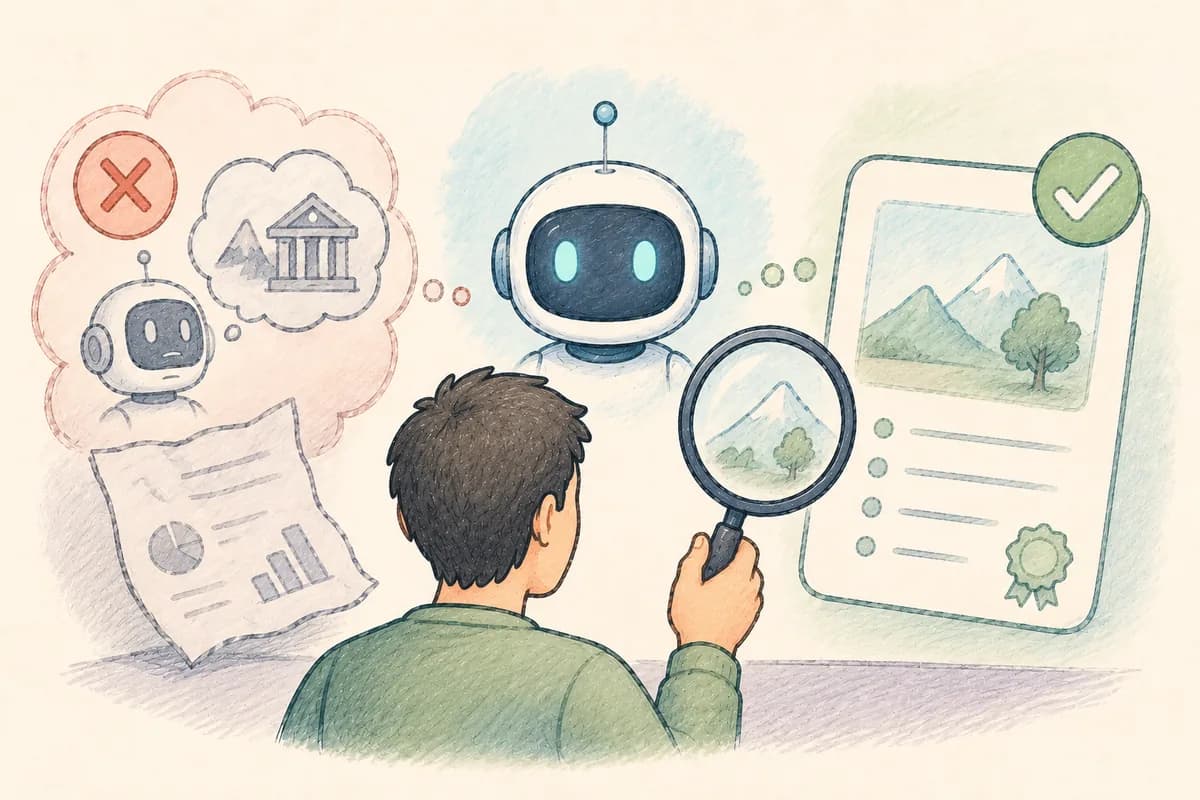
Here is the shift that fixes most of this. By default, an AI tool has one job when it summarizes: sound right. It produces the most plausible, well-organized short version of your source, and plausibility is all it optimizes for.
The difference between a trustworthy summary and an untrustworthy one comes from handing the model a second job on top of the first: find where it might be wrong. First draft to sound right, second pass to hunt for its own errors. A model asked only to summarize will confidently hand you its best guess. That same model, asked to turn around and interrogate that guess against the source, catches things it just glossed over. Same model, same source, very different output, purely because you changed the assignment.
The Three-Line Verification Prompt
You can trigger that second job with a short you paste in right after the model gives you its first summary. It asks the model to do three things:
- List three ways your summary could be incomplete or misleading. This forces the model to look for its own gaps instead of defending its draft.
- For each one, cite specific evidence from the source that confirms or refutes the concern. This is the key step. It drags the model back to the actual text rather than letting it reason from its own summary, which is how it grounds the check in real evidence instead of more plausible-sounding guesses.
- Give me a revised summary. The corrected version, rebuilt after the model has argued with itself.
That is the whole tool. Three lines, pasted after any summary you are about to rely on.
What It Looks Like in Action
Picture a research paper whose headline finding is that octopuses can recognize individual human faces. Clean, shareable, headline-ready. The story underneath is messier, the way real studies usually are.
Ask a model to summarize it cold and you get the clean version: octopuses recognize individual human faces, evidence of advanced cognition, and so on. Accurate to the abstract, and exactly what most people would repeat.
Now run the prompt, and the model, forced to check itself against the full paper, surfaces what the quick summary buried:
- The study ran on seven animals with substantial individual variation. A couple showed the effect strongly, the rest barely, which the tidy headline hides.
- The recognition was far stronger for the specific handlers the octopuses saw over and over during than for new faces they had never encountered. That makes the broad claim ("can recognize human faces") weaker than it sounds, because it leans heavily on familiarity.
- The effect might not be about faces at all. The animals may have been reacting to the color and pattern of each handler's wetsuit rather than anything on the person's face, which would mean the paper is measuring something much simpler than "facial recognition."
None of that required outside knowledge. It was all sitting in the source. The first summary skipped it because skipping it produced a cleaner, more plausible paragraph, which was the only job the model had been given.
The Catch: It Is Slower and More Cautious
This is not free. The verification process takes longer than a straight summary, sometimes considerably, and it produces more hedged, more cautious answers. The confident one-paragraph version becomes a three-part critique plus a revised summary full of qualifiers.
That trade is the entire point. The hedging is not the model being wishy-washy. It is the model showing you the uncertainty that was always there and that the first draft papered over. You do not want this on everything. You want it exactly when being wrong would cost you.
Where to Actually Use This
Reserve the verification prompt for high-stakes summaries, the ones where a buried error into a real problem:
- Legal documents. Contracts, leases, terms, anything where a missed clause or a distorted obligation has consequences.
- Medical and insurance information. Coverage details, policy terms, anything affecting a health or money decision.
- Financial breakdowns. Statements, reports, numbers you are about to act on or forward.
- Research summaries for a boss or a client. Anything going out under your name, where "the AI told me" is not a defense you want to give.
For summarizing a newsletter or catching up on a group chat, skip it. The clean version is fine. Match the effort to the stakes.
The Bottom Line
AI summarizes well and hallucinates quietly, and long sources are precisely where quiet errors survive because nobody goes back to check. You do not fix that by hoping the summary is right. You fix it by giving the model a second job: draft it to sound right, then force it to find where it is wrong, citing the source line by line. Three lines of prompt turn a confident guess into a checked answer. On anything that matters, that second pass is the difference between a summary you can forward and one that quietly embarrasses you later.