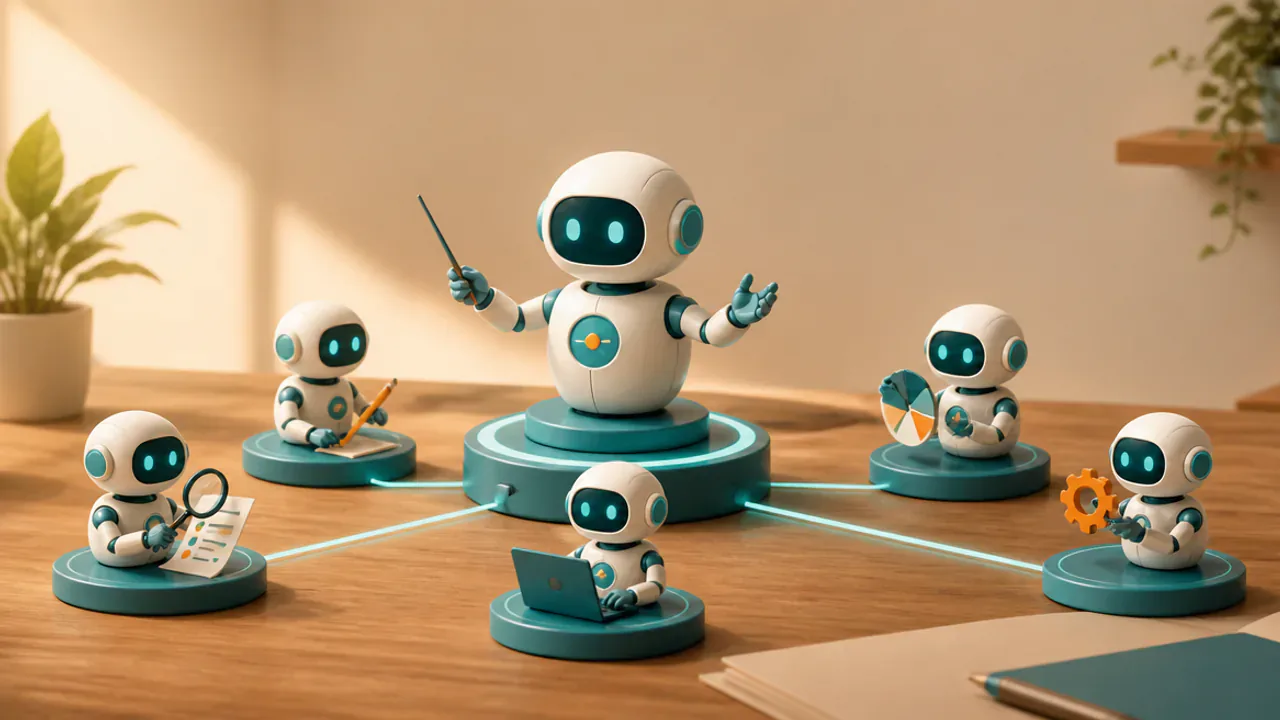
From Prompt to Production: Building AI Agents
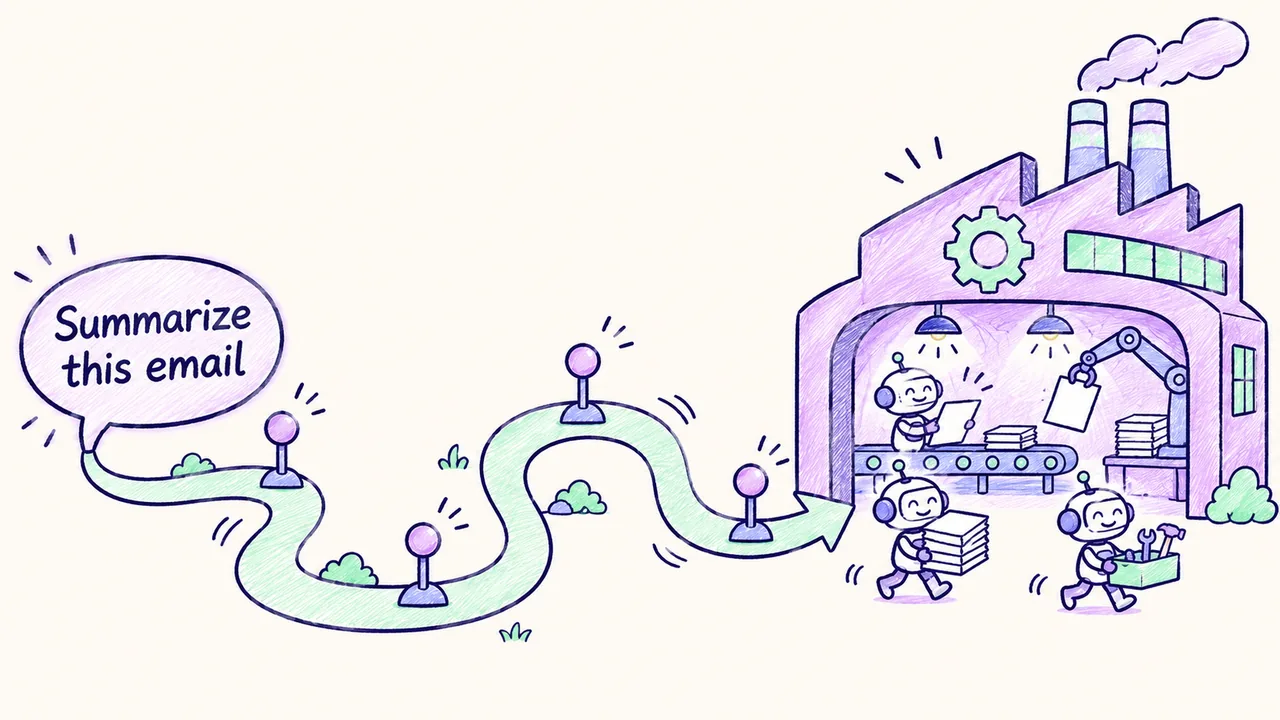
This series walks you from a single to an AI system that runs in production. It covers agents, retrieval, , automation platforms, code, deployment and the people you build it for.
Every term is defined the first time it appears, and no AI is assumed. Some Python or JavaScript helps with the code samples, but you can follow the ideas without it.
Who this series is for
If you are an engineer or technical builder who is new to AI, this gives you a clear map of how agents and automations are built and shipped.
If you are preparing for an AI automation engineer interview, the order of topics follows the skills those job descriptions ask for most. Each article ends with how its topic shows up in interviews.
What you'll learn
By the end you will be able to:
- Explain what an is and draw the agent loop: reason, call a tool, observe, repeat.
- Shape agents with instructions, memory, context and triggers, and keep them safe with at every stage.
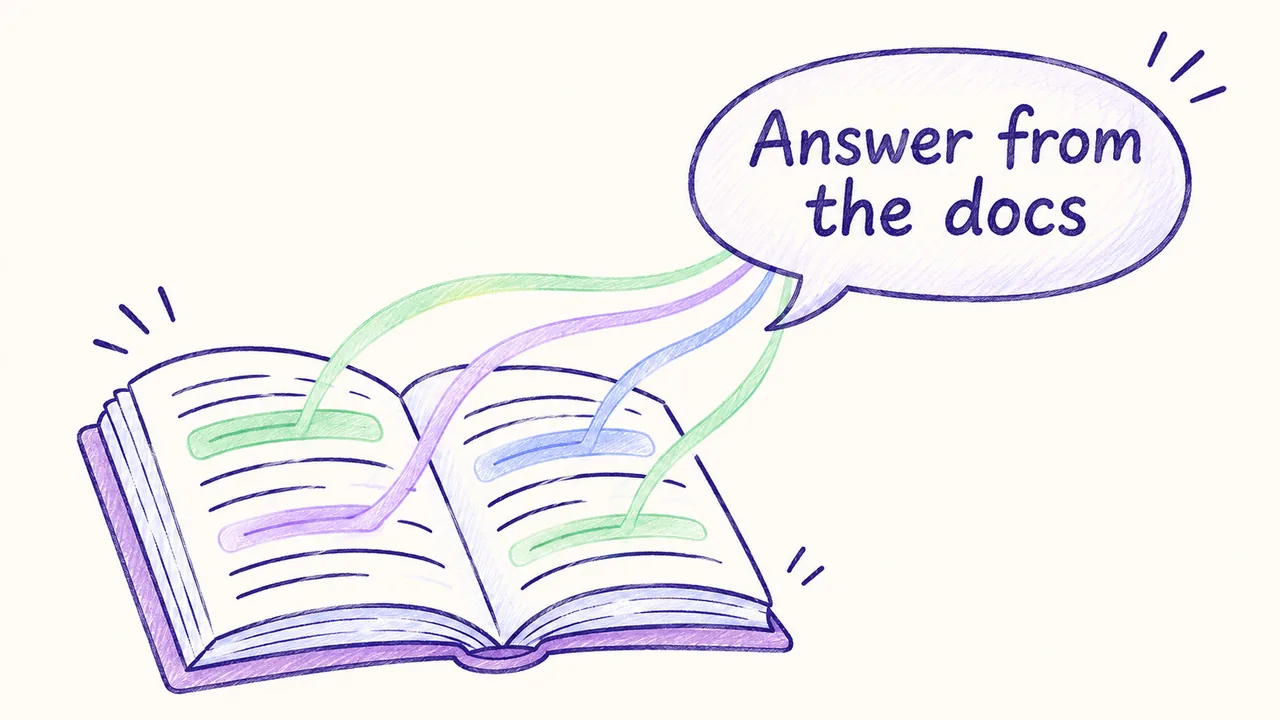
- Build : chunk, embed, search, rerank and measure the results.
- Choose between frameworks (LangChain, LangGraph, LlamaIndex) and custom code.
- Explain the and design a small MCP server.
- Build reliable automations with webhooks, retries, idempotency, OAuth scopes and rate limits, in no-code tools, Python and Node.js.
- Ship and verify AI-written code, and run AI systems in production with CI, containers, tracing and evals.
- Work with stakeholders to pick the right problems, including the ones where AI is the wrong tool.
- Get started with the Claude Agent SDK and Google's Agent Development Kit (ADK).
- Answer the most likely screening, technical and behavioral interview questions.

- RAG
- MCP
- Automation
- Guardrails
- OAuth
- Orchestration
- DevOps
How to use this series
Read in order the first time. Article 2, AI agents end to end, is the foundation for everything after it.
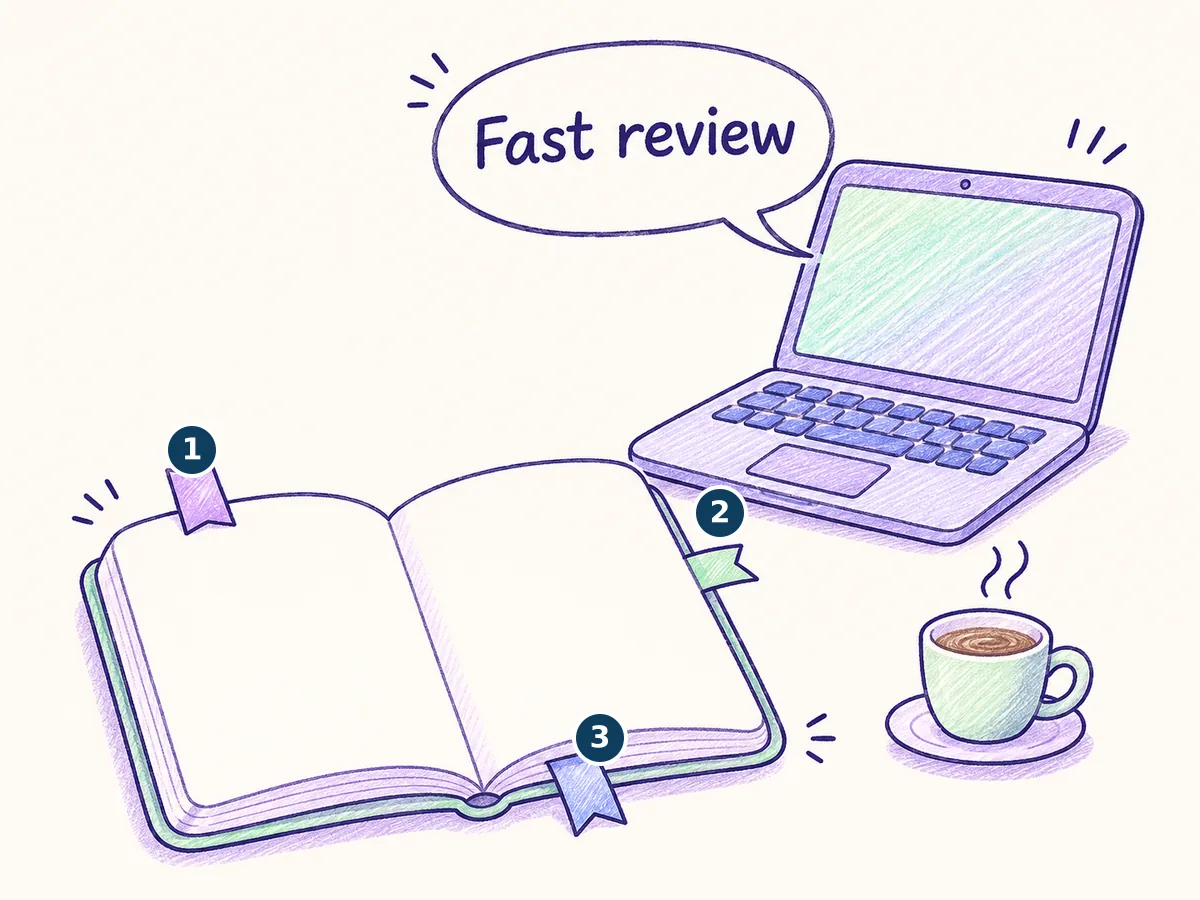
Every topic article has the same shape: a 60-second fast review, key terms, the main explanation with examples and images, real-world uses, how the topic shows up on the job, how it shows up in interviews, and links to the official docs.
Short on time? Read only the fast review and key terms of each article. That works as a full refresher in about 30 minutes.
Preparing for an interview? Follow the study order in Article 1, finish with Article 13, and rehearse the answers out loud.
- Read in order
- Fast review
- Interview prep
Articles in this series
- Article 0: From Prompt to Production: Building AI Agents. This page: who it's for, what you'll learn and how to use the series.
- Article 1: Part 1: Become an AI Automation Engineer - A Roadmap. Your 60-second intro, engagement terms, rate approach and a suggested study order.
- Article 2: Part 2: AI Agents End to End. Tool calling, instructions, memory, context, triggers, one full agent run and guardrails.
- Article 3: Part 3: RAG and Vector Databases. , , vector stores, , reranking, recall@k and faithfulness.
- Article 4: Part 4: AI Agent Orchestration Frameworks. LangChain, LangGraph and LlamaIndex, and framework versus custom code.
- Article 5: Part 5: Model Context Protocol (MCP). Host, client and server, tools, resources and prompts, transports, auth and server design.
- Article 6: Part 6: Workflow Automation Tools. n8n, Workato and Zapier, plus webhooks, idempotency, retries and dead-letter queues.
- Article 7: Part 7: Python and Node.js for Automation. Async code, error handling and retries, data cleaning and validation.
- Article 8: Part 8: AI Coding Assistants: Claude Code and GitHub Copilot. Claude Code and GitHub Copilot, and how to verify AI-written code.
- Article 9: Part 9: DevOps for AI Systems. Git, Docker, CI/CD, cloud, tracing, cost and evals.
- Article 10: Part 10: SaaS Integrations for AI Automation. Slack, Google Workspace and Airtable APIs, OAuth scopes and rate limits.
- Article 11: Part 11: AI Stakeholders and Solutioning. Discovery, value versus feasibility, when not to use AI, and prototype to production.
- Article 12: Part 12: Claude Agent SDK and Google ADK. Building agents in code with both SDKs, and MCP versus A2A.
- Article 13: Part 13: Likely Interview Questions for AI Automation Engineers. Answer outlines for screening, technical and behavioral questions.